Simple Meditation Techniques for a Busy Agitated Mind

Anúncios
Introduction
In today’s fast-paced world, our minds often resemble a bustling street corner, constantly filled with thoughts, worries, and distractions. This overwhelming mental chatter, akin to a never-ending whirlwind of thoughts, can make it seem impossible to find a moment of peace. Our insatiable consumption of social media, constant connectivity via smartphones, and relentless work schedules further intensify this mental chaos, leading to increased stress levels and anxiety. However, implementing simple meditation techniques can be a transformative remedy, promoting mental clarity and emotional balance.
Anúncios
Meditation, once considered an esoteric practice, has now become a mainstream approach to improving mental health and well-being. Scientific studies bolster its credibility, showing how regular meditation can reduce stress, improve attention, and even foster a more compassionate and empathetic outlook on life. Integrating these techniques into your daily routine aligns perfectly with the philosophy of Daily Positive Affirmations, which emphasizes the importance of nurturing a positive mindset. By practicing meditation, one can effectively calm the storm within and pave the way for self-discovery and personal growth.
In this article, we will explore the Top 5 simple meditation techniques that anyone can practice, even when the mind feels overwhelmed. These strategies are designed to help you cultivate mindfulness and enhance your emotional well-being, no matter how busy life may get. Whether you’re a seasoned meditator or new to the practice, these techniques are accessible and adaptable, ensuring you can integrate them seamlessly into your daily life.
Anúncios
Top 5 Simple Meditation Techniques to Practice Even with an Agitated Mind
In today’s fast-paced world, stress and anxiety are common companions for many individuals. The pressure to meet deadlines, juggle multiple responsibilities, and stay connected in an ever-digital environment can easily lead to a cluttered and agitated mind. Meditation, however, presents a beacon of hope, a pathway to achieving peace and focus even when faced with life’s relentless demands. Meditation doesn’t have to be complex or time-consuming; simple techniques exist that allow even the most frenzied minds to find serenity. Below are five straightforward meditation techniques that can be seamlessly integrated into your daily life, promoting mindfulness and tranquility.
5. Body Scan Meditation: Tune into Your Inner Self
The body scan meditation is a method that invites you to become acutely aware of your physical body, releasing tension and fostering a deeper mind-body connection. Imagine this technique as a personal retreat where you withdraw attention from the external chaos and focus it inwardly to resonate with your own being.
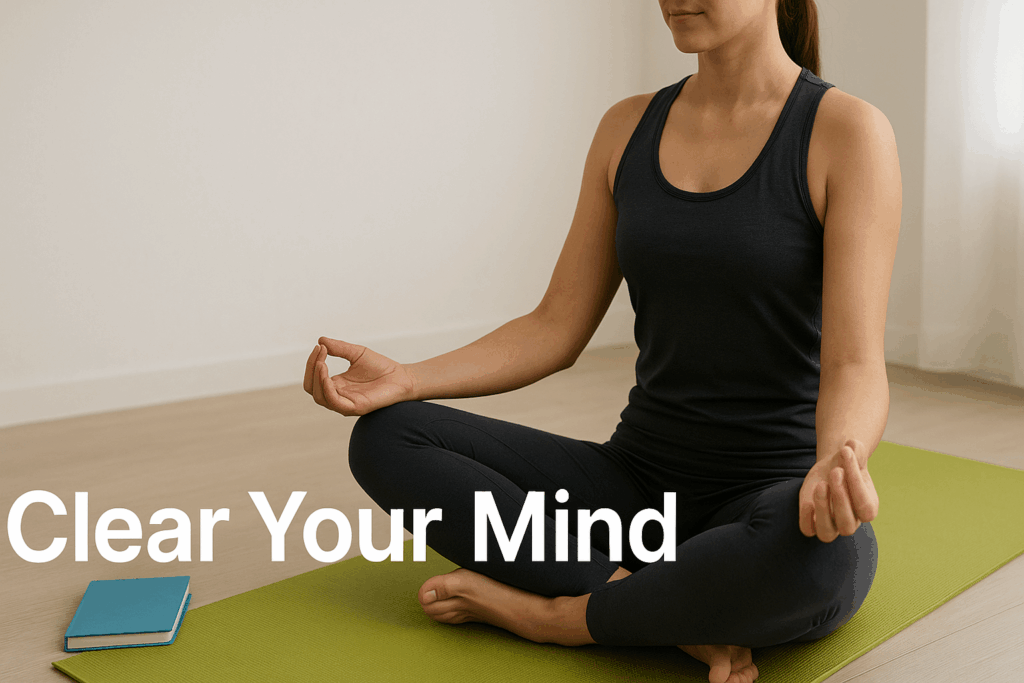
By lying down comfortably, you start the scan at your feet and move upwards, focusing on individual sensations in each body part. This meditative journey isn’t about finding discomfort or judgment but merely noticing what ‘is.’ For instance, you may feel a subtle tingling in your feet or a warmth enveloping your legs. As you progress, the act of directing your attention and embracing any sensation that arises helps disperse held tension—making the body scan an excellent practice for promoting relaxation.
- Begin by finding a quiet space free of distractions.
- Center your thoughts with three deep breaths, preparing for internal focus.
- Imagine any tension fading away with each exhalation as you conduct the scan.
4. Breathing Techniques: Harness the Power of Breath
When caught in the whirlwind of stress, the breath becomes a life raft. Breathing techniques are fundamental to meditation, ideal for immediate stress relief and grounding. Whether you’re at your desk, in a busy street, or lying in bed, harnessing the breath can bring you solace.
Among the myriad of breathing exercises, the «4-7-8 method» stands out for its simplicity and effectiveness. The idea is straightforward: inhale gently through your nose for a count of four, hold that breath for a count of seven, then exhale slowly through your mouth for a count of eight. This specific pattern not only calms your racing heart but also serves as a gentle reminder that control remains within your reach, regardless of external circumstances.
- Apply breathing techniques in moments of stress or anxiety.
- Reset your focus and demeanor by revisiting the 4-7-8 pattern.
- Embrace each breath’s purpose, enhancing mindfulness.
3. Guided Imagery: Escape to a Mental Sanctuary
For a mind overwhelmed by life’s pressures, guided imagery offers a unique escape—drawing on the imagination to conjure tranquil scenes. This technique functions as a mental retreat, taking you away from stressors by visualizing serene and soothing environments.
Whether following a recorded narrative or personally script-driven, guided imagery offers unlimited potential for creativity. You might picture yourself basking under the gentle sun on a shoreline, hearing waves softly crash in the distance, or strolling through a lush, quiet forest with the sweet scent of pine in the air. Such imagery not only transports the mind but causes a tangible decrease in stress, often leaving you revitalized.
- Explore online platforms for guided imagery recordings to suit your needs.
- Ensure a comfortable standing, sitting, or lying position during this practice.
- Fully dive into every detail of your visualization for a deep sensory immersion.
2. Mantra Meditation: Find Your Inner Voice
Mantra meditation is a powerful approach to centering the mind and fending off negative thought patterns. Whether a phrase or a single sound, a mantra provides focus and can elevate your state of consciousness.
Selecting a mantra that resonates personally—such as «I am calm,» or «I am enough»—is essential. With eyes closed, this mantra is repeated silently or quietly aloud, creating a rhythm that helps dominate the realm of chaotic thoughts. Over time, practicing mantra meditation fosters positive internal dialogue, effectively reinforcing self-esteem and enriching daily affirmations.
- Choose a mantra that holds personal significance and meaning.
- Dedicate five to ten minutes each day to repeat your mantra, weaving it into your routine.
- Consider blending mantra meditation with breathing exercises for enhanced effect.
1. Mindful Walking: A Moving Meditation
Mindfulness doesn’t have to remain static—it can walk with you. Mindful walking transforms a routine activity into a meditative exercise that anchors you in the present.
Instead of allowing your mind to wander aimlessly, mindful walking asks for attention on physical movements and environmental interactions. Feel the ground under your feet, notice the pace of your breath as you move, and absorb the natural world surrounding you. In this awareness, each step becomes a meditative anchor, proving that calmness and presence can coexist even within a bustling world.
- Opt for a peaceful, distraction-free space for your mindful walks.
- Engage all senses as you walk, noting textures, sounds, and fragrances.
- Set intentions ahead of your walk, boosting your mindfulness practice.
By integrating these easy meditation techniques into your life, you do not merely adopt new habits; you embark on a journey toward a more centered, conscious, and serene self. Each method offers a distinct path to mindfulness, presenting opportunities to cultivate calmness amidst chaos. Remember, these practices don’t demand perfection—only your genuine participation and openness to discover the peace that resides within.
| Category | Key Features |
|---|---|
| Breathing Techniques | Focuses on the rhythm of inhalation and exhalation, helping to anchor thoughts and induce calm. |
| Mindfulness Meditation | Encourages awareness of the present moment, reducing distraction and increasing mental clarity. |
| Visualization | Utilizes imagery to foster a sense of peace, transforming chaotic thoughts into serene visuals. |
| Guided Meditation | Involves audio or live instructions, creating a structured meditation experience that can ease anxiety. |
The above table illustrates various techniques that individuals can employ to meditate effectively, even when their minds are racing with thoughts. First among these is breathing techniques, which serve as the foundation of meditation practice, providing a simple yet profound method to center oneself. By concentrating on the breath, practitioners learn to navigate through a torrent of thoughts, returning to a state of calm.Additionally, mindfulness meditation teaches us to embrace the present without judgment. This powerful approach can significantly enhance an individual’s ability to manage distractions, fostering mental clarity and emotional stability. It is this practice of acknowledging thoughts without attachment that can help one feel more grounded, especially in hectic moments.Moving into the realm of creativity, visualization allows for an immersion in peaceful scenarios. This technique can transform restless thoughts into calming images, providing a mental escape that enhances relaxation and well-being. Engaging the imagination can be an effective tool for those who find standard meditation intimidating or challenging.Lastly, there’s guided meditation, which provides direction during the meditation process. Many find that listening to guided sessions can alleviate self-doubt about their practice. This method is particularly accessible for beginners or those with busy minds, as the guidance offers structure, making the experience feel less overwhelming. Each of these categories presents a unique way to engage with meditation, catering to diverse preferences and needs.
Frequently Asked Questions About Simple Meditation Techniques for a Restless Mind
What are some simple meditation techniques for beginners?
For those just starting their meditation journey, beginning with simple techniques can be highly beneficial. Practices such as mindful breathing, where you focus intensely on each breath, or body scanning, which involves paying attention to physical sensations from head to toe, are easily accessible. These methods don’t require extensive experience or time commitment, making them ideal for beginners who may have a restless mind.
Can meditation truly help calm a restless mind?
Yes, consistent practice of meditation has been shown to reduce stress and enhance mental clarity. While it might not offer instant tranquility, especially for those with very agitated thoughts, over time, meditation encourages the ability to recognize and respond thoughtfully to distractions. Neuroscientific research supports that regular meditation can lead to an increase in gray matter density, particularly in regions of the brain associated with memory, sense of self, empathy, and stress regulation.
How often should I meditate to see benefits?
The frequency of meditation can vary depending on your personal goals. However, many experts suggest starting with just a few minutes each day and gradually increasing the time. A practice of 5 to 10 minutes daily can lead to noticeable improvements in mental well-being and focus for beginners. Consistency, rather than duration, tends to yield more profound benefits.
What if I can’t stop my thoughts during meditation?
It’s a common misconception that meditation involves completely clearing the mind of thoughts. Rather than stopping thoughts, meditation aims to alter your relationship with them. If your mind starts to wander, gently bring your focus back to the chosen point of concentration, such as your breath or a mantra. Straying thoughts are natural; the key is how you redirect your attention.
Are there any tools or apps that can support meditation practice?
In today’s digital age, several apps are designed to support meditation practices, providing guided sessions and reminders to help individuals maintain their routines. Popular options include Headspace, Calm, and Insight Timer. These platforms offer a variety of meditation styles and durations catering to different needs, making it easier to incorporate meditation into a busy lifestyle.
Conclusion
Meditation can often seem intimidating, especially when coupled with a restless mind. However, incorporating simple techniques into daily practice can make this ancient practice accessible and deeply rewarding. Amidst the chaos of our daily lives, techniques such as mindful breathing, body scanning, and guided imagery serve as entry points into a state of tranquility and focus.
Mindful breathing remains one of the most straightforward yet profound practices to calm an agitated mind. By consciously focusing on each breath, individuals can anchor themselves in the present moment, allowing stress and anxious thoughts to dissipate. Similarly, the practice of body scanning encourages awareness by guiding attention through different parts of the body, revealing tension points and fostering a sense of relaxation.
Guided imagery, another effective method, leverages the power of imagination to create mental space from life’s pressures, promoting both mental clarity and emotional well-being. These techniques ultimately provide the necessary tools to transform a tumultuous mind into a peaceful one, making meditation an attainable goal for anyone willing to try.
It is important to remember that meditation does not require perfection; rather, consistent practice is key. The simplicity of these techniques makes them ideal for integrating within the framework of daily positive affirmations, enhancing one’s journey towards personal growth and mental wellness. As the power of meditation continues to unfold through these accessible approaches, it not only enriches the mental landscape but also invites individuals to explore further and harness the profound potential of a calm mind.